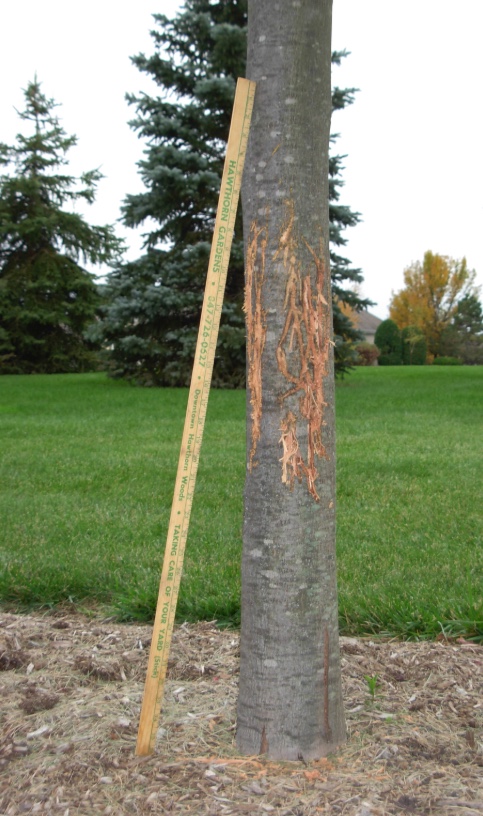
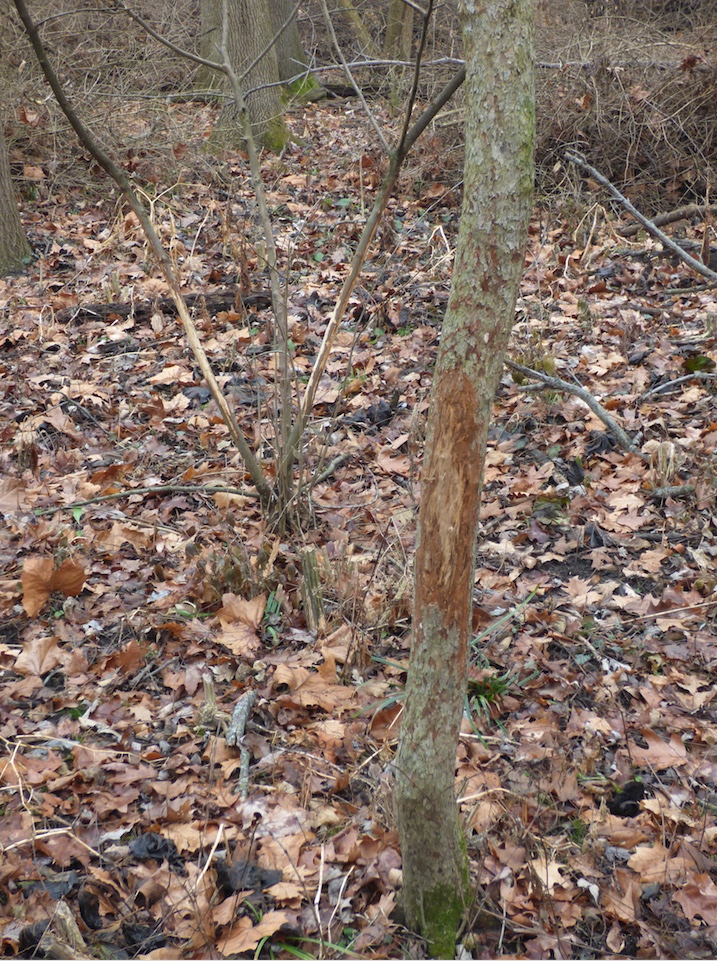
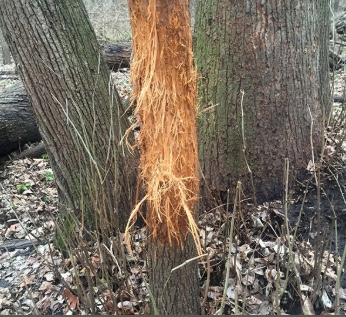
Velvet, the soft, membranous layer of blood vessels supplying nutrition to the fast-developing antlers, dries up and is shed in a day or two after the antlers are fully developed. After the velvet is gone, males rub their fully developed, hardened antlers against small trees and shrubs, usually 2 to 3 feet above the ground on trunks. Occasionally, males will bend a small sapling and rub the entire length of the trunk. The removal and shredding of bark on trees and shrubs is done in part with the tines and main beams of an antler. Most of the bark and limb damage is done by antler bases and coronets—small, knobby protuberances around the base of each antler—and by pearls and thorns, long exostoses on the surface of the antler. Glands on the foreheads leave a scent behind when rubbed on the vegetation. In Illinois, rubbing by male deer begins in August.
When deer rub their antlers against tree to get rid of their velvet, they can cause damage to the tree. The bark may look shredded. Note the measuring stick for scale.
Photo: Bill Peterson
A buck has been rubbing its antlers on this small tree.
Photo: Jared Duquette
Deer have used this tree as a rub so many times the bark is totally stripped off and the wood underneath is shredded.
Photo: IDNR
Browse Lines
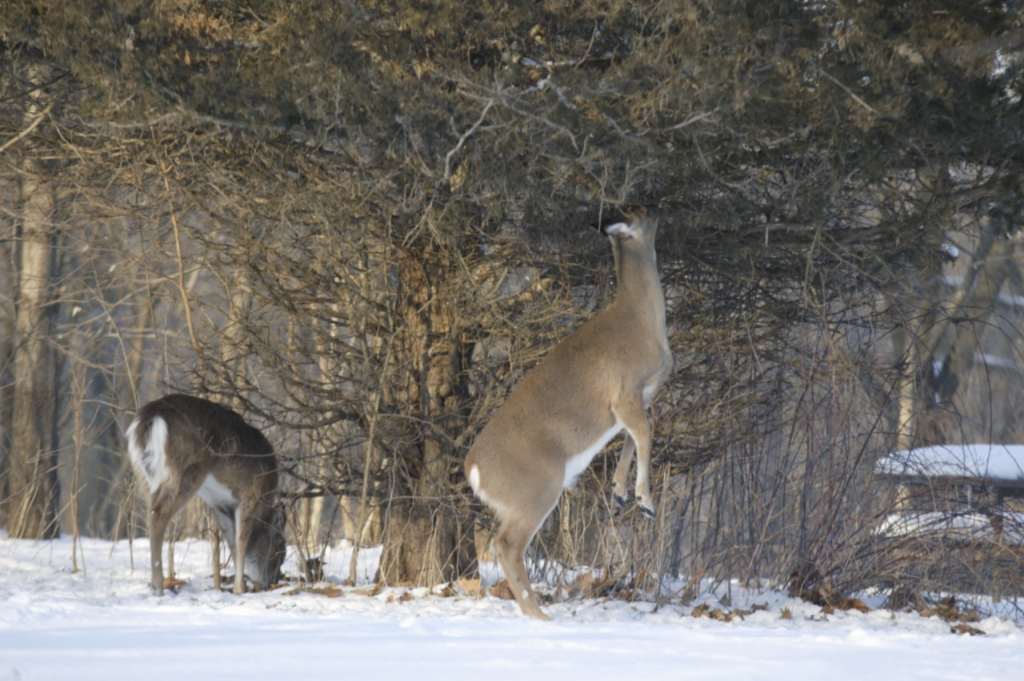
Deer sometimes heavily browse an area causing a “browse line.” A browse line is a distinct demarcation between completely browsed-off vegetation and areas higher up that the deer could not reach.
This deer is standing on its hind legs to reach vegetation not covered by the snow.
Photo: IDNR
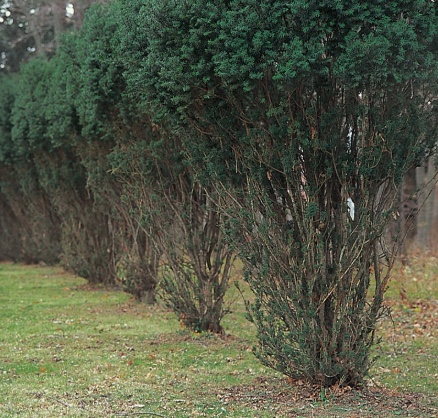
During the winter when food is scarce, deer will feed as high up as they can reach. There is a clear browse line on this hedge of yews.
Photo: IDNR
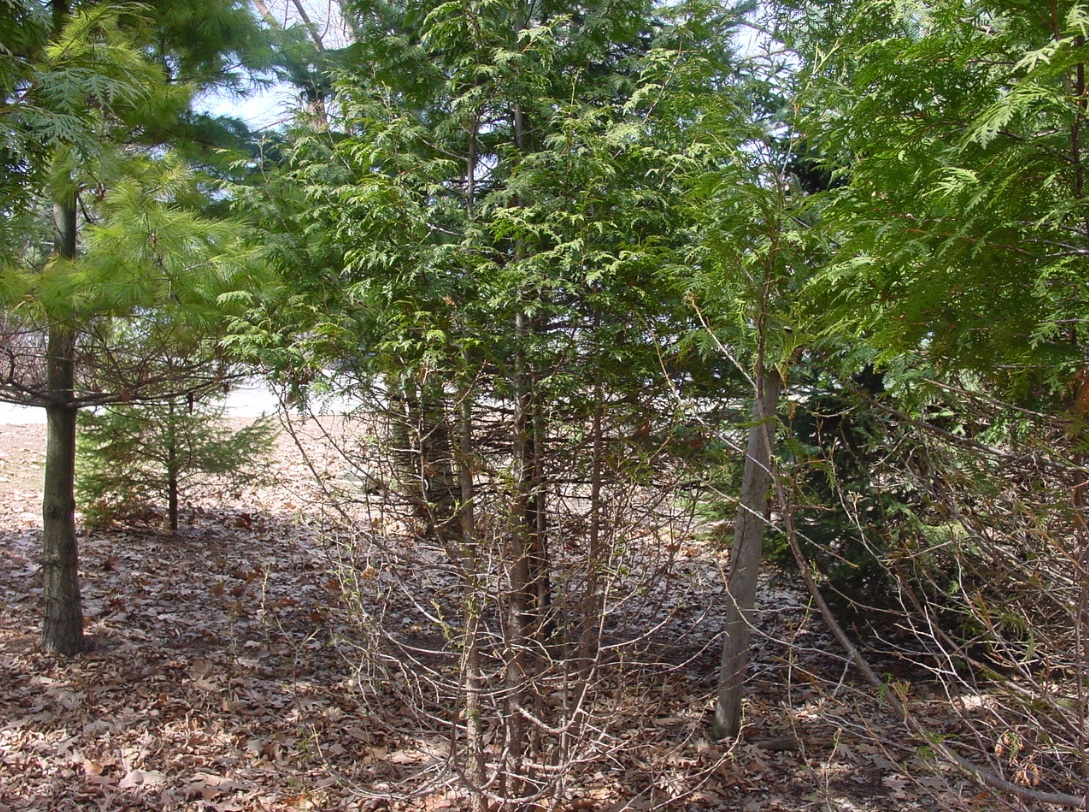
Another example of a deer browse line.
Photo: USDA
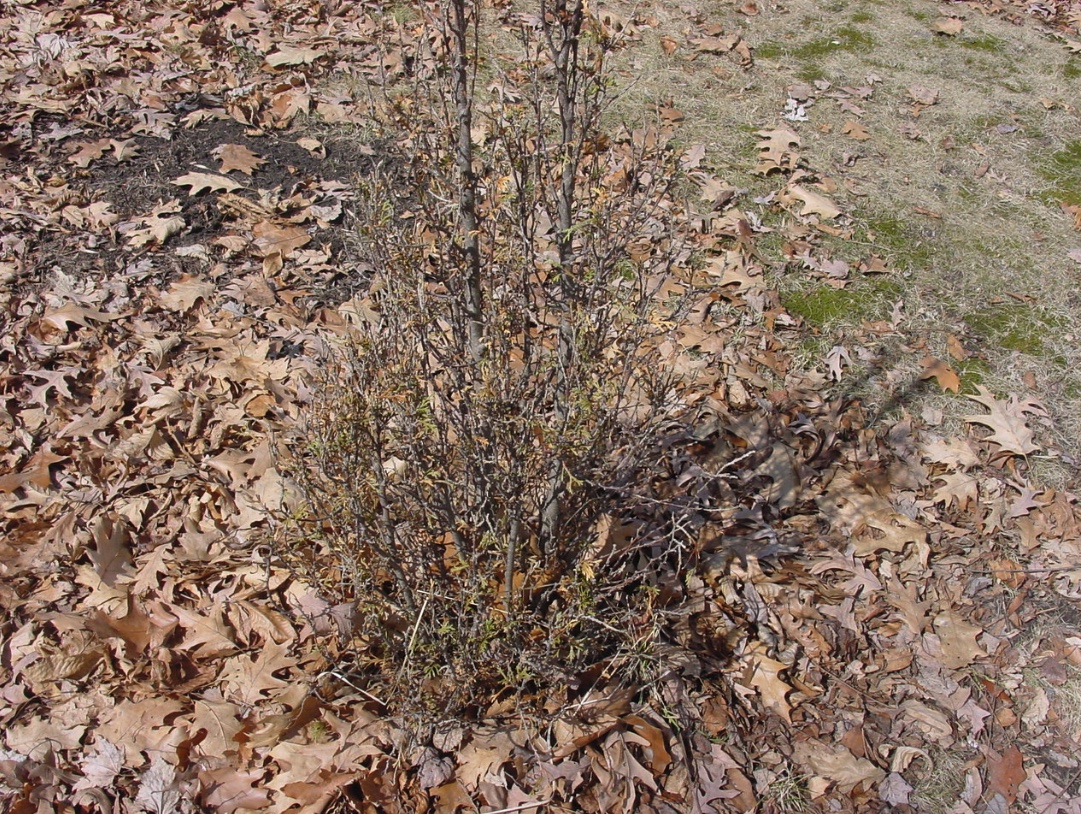
This shrub was severely damaged by deer browsing on it.
Photo: USDA
Scrapes
Scrapes are made in timbered areas, along trails or access roads, and in other openings. Males paw the earth bare of vegetation to form an area about 1 to 3 feet or more in diameter. Male deer also usually urinate on this area and rub a branch of a shrub or tree immediately above the scrape. In most cases, deer choose a branch about 5 feet high that they lick or chew lightly and rub with their antlers and foreheads.
The scrape area acts as a chemical communication center, conveying territorial warnings or possibly serving to increase the chance of finding estrous females during the rut. Females urinate on the scrape to signal their receptiveness to breeding. The male then attempts to catch up with the female and copulate.
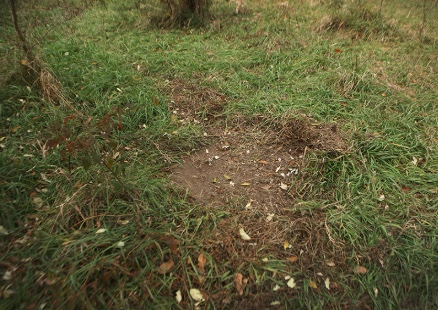
Deer have scraped away the ground cover.
Photo: IDNR
Other Signs
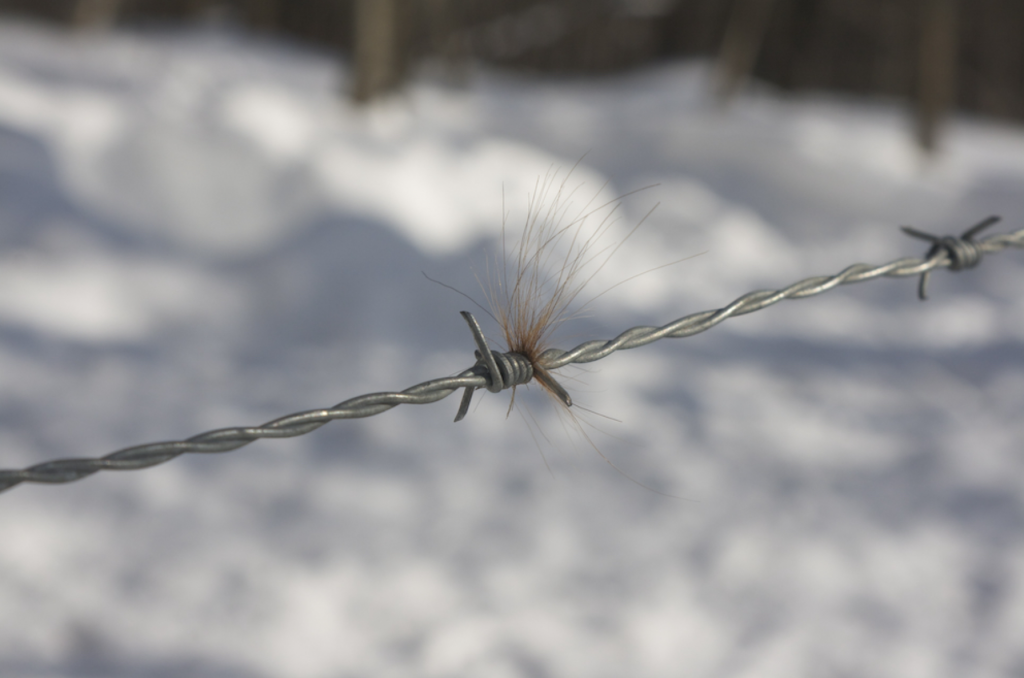
Deer sometimes leave behind a tuft of hair on fences as they push through or jump over them.